Campground Operations
Accessibility at Campgrounds: What the ADA Expects of Sites, Routes, and Facilities
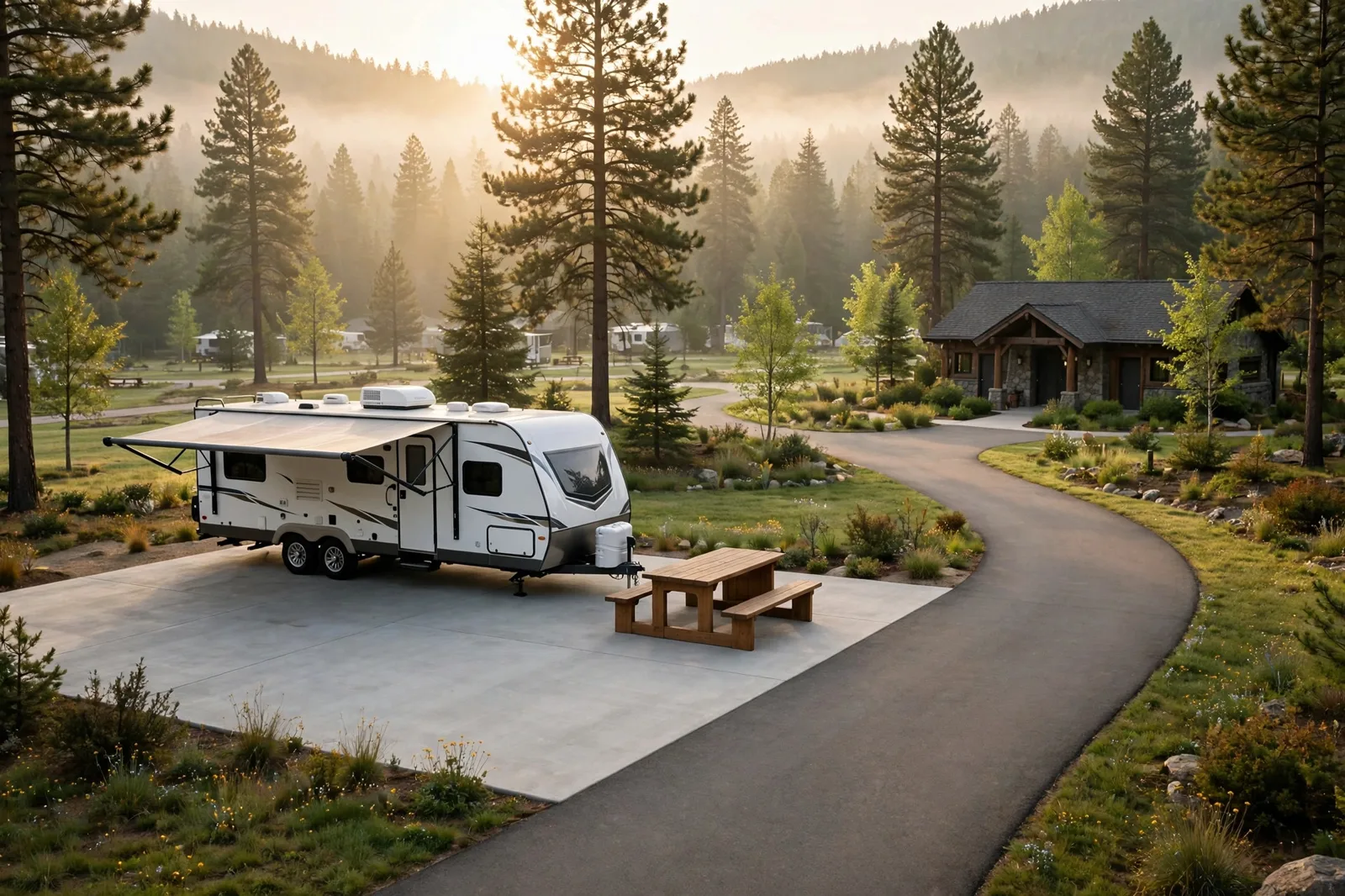
Accessibility questions make campground owners nervous, partly because the honest answer is less tidy than most articles pretend. So here is the untidy truth up front, followed by what to do about it. This article is general information for orientation only — it is not legal advice, and your park's obligations depend on its specifics. For decisions, consult your state campground association and an attorney or accessibility consultant familiar with the ADA.
What Is Fact: The Legal Frame
- A privately operated campground is a place of public accommodation under Title III of the ADA — the law's categories include places of recreation and lodging. The obligations apply whether you have ten sites or two hundred.
- The 2010 ADA Standards for Accessible Design govern new construction and alterations for the elements they cover: your office and store, restrooms and bathhouses, parking, accessible routes between buildings, pools (which have specific entry requirements), laundry rooms, and similar built facilities. If you build or alter it, assume the 2010 Standards speak to it and design accordingly.
- Existing facilities that predate the standards are subject to barrier removal where it is "readily achievable" — an ongoing, fact-specific obligation that weighs cost against your resources. It is not a one-time pass and not an exemption; it's a standing expectation to keep removing barriers as it becomes feasible.
- Here is the part most articles get wrong: the 2010 ADA Standards contain no campground-specific scoping table — no section that says how many accessible campsites a private park must provide. Owners searching the standards for a campsite percentage will not find one.
Where Campground-Specific Guidance Actually Lives (Fact)
The detailed design guidance for camping facilities comes from the U.S. Access Board's Outdoor Developed Areas guidelines, issued under the Architectural Barriers Act (ABA) and finalized in 2013. By law those guidelines bind federal agencies (Forest Service, Corps of Engineers, National Park Service and similar) and facilities built on federal land — not private parks directly. But they are the most complete, authoritative design reference for accessible campsites that exists, and they are widely used as best-practice guidance for private campground design. Their scoping approach for camping units with mobility features, applied per type of camping offered (RV, tent, cabin), is:
- 1 site: 1 unit with mobility features
- 2–25 sites: 2 units with mobility features
- 26–50 sites: 3 units with mobility features
- 51–75 sites: 4 units with mobility features
- 76–100 sites: 5 units with mobility features
- 101–150 sites: 7 units with mobility features
- 151–200 sites: 8 units with mobility features
- Over 200 sites: 8 units, plus 2% of the number over 200, with mobility features
The guidelines also address the features that make a site genuinely usable: firm and stable surfaces at the site and its features, accessible routes connecting sites to shared facilities, and accessible picnic tables, fire rings, and utility hookups. Treat the table and the technical provisions as your design target when building or renovating — while understanding (fact) that for a private park they are the reference standard rather than the literal text of your ADA obligation.
What This Means in Practice (Professional Opinion)
When you build or alter, build accessible. New bathhouse, new loop, new pool: design to the 2010 Standards for the building elements and to the Access Board guidelines for the sites. Accessibility added during construction costs a fraction of retrofitting, and "we didn't know" has never been a defense.
Walk your routes like a guest who uses a wheelchair. Add this to your guest-experience self-audit: Can a guest travel from an accessible site to the bathhouse, office, and laundry without crossing loose gravel, grass, a steep grade, or a step? Routes are where campground accessibility most often quietly fails — the site is fine and the building is fine, but the path between them isn't.
Say exactly what you offer, in your listings and at booking. Which sites are accessible, what surface, what the route to the bathhouse is like, whether the bathhouse has a roll-in shower. Accurate description is both good service and good risk management: a guest who books informed is a guest whose needs you can actually meet. Never label a site "accessible" for a feature it doesn't have.
Train staff on the human side. Service animals are not pets and are not subject to pet fees or breed rules; the questions staff may ask are narrow and defined by the ADA regulations — teach them, because the front-desk conversation is where most accessibility complaints are born. Work this into seasonal staff training rather than leaving it to instinct.
Accessibility is also a market reality, not only a legal one: KOA's annual research devotes a section to campers with accessibility needs because they are a real and growing share of your guests. The parks that serve them well earn fierce loyalty. Start with one honest audit against the Access Board guidelines, fix routes and surfaces first, and design every future project accessible from the drawing.
RVeyOS is currently in development; accurate site descriptions and guest information are part of what we're building. Join the waitlist for launch updates.