Guest Experience
Walk Your Park Like a Guest: A Self-Audit of the Arrival-to-Departure Experience
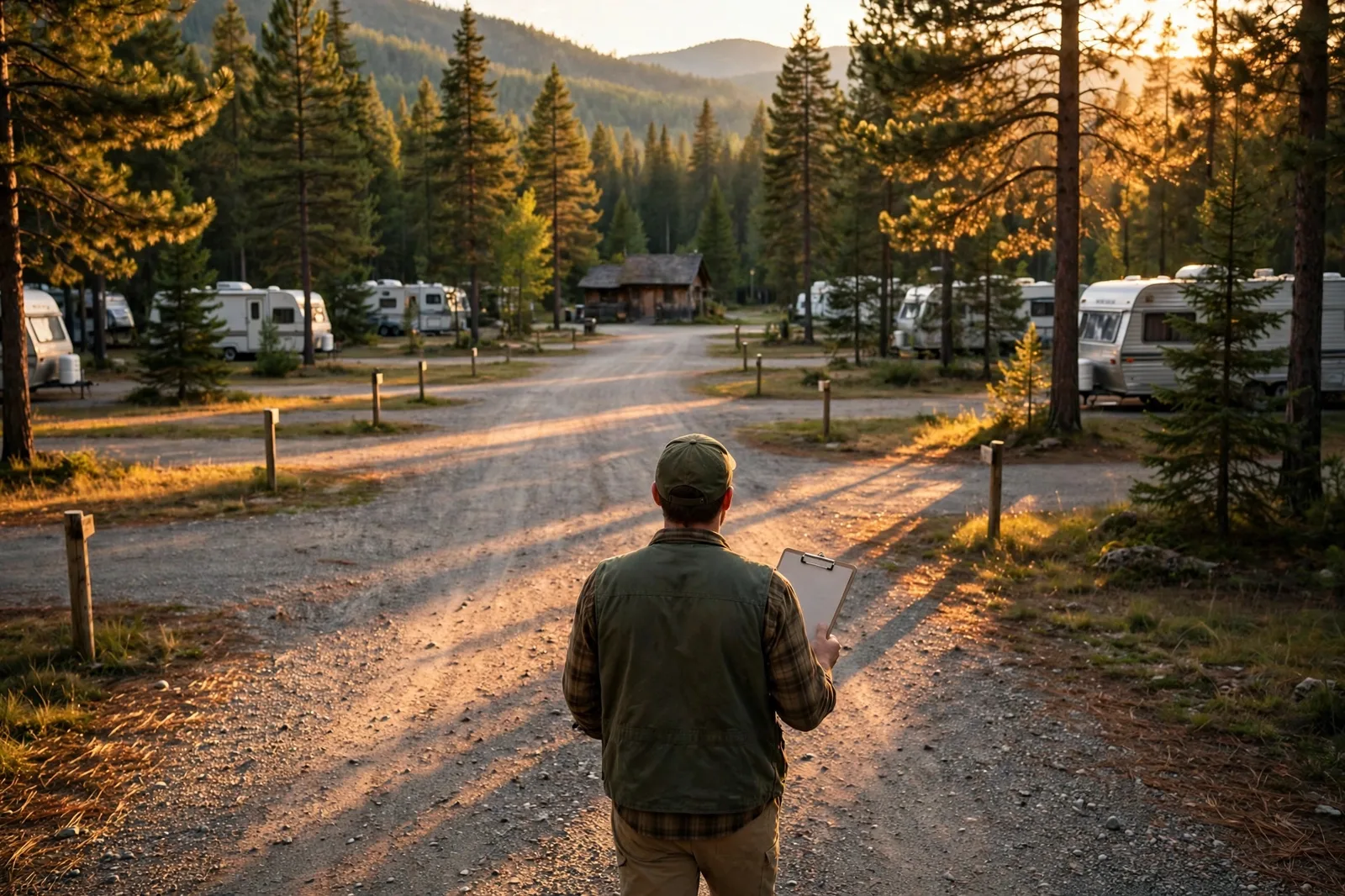
You drive your park's entrance road every day, which is exactly why you no longer see it. The faded sign, the pothole everyone steers around, the bathhouse door that sticks — they faded into the background of your attention sometime in your second season. Your guests see all of it, fresh, in the first ten minutes, and those ten minutes color everything that follows.
The fix is a discipline, not a renovation: walk your park like a guest, in order, from the moment they find you online to the moment they pull out. Do it twice a year — once before peak season, once during it. Here's the route.
Stage 1: The booking (do this from your phone, in your truck)
- Search for your park the way a stranger would — by town and "RV park," not by your name. Where do you appear, and what does the listing say? Are the photos yours, current, and flattering?
- Open your website on your phone. Time how long it takes to answer three questions: Are you open? What does a site cost? Can I book it right now?
- Complete a test booking or reservation request. Count the steps, the fields, the moments of confusion. Every unnecessary field is a guest you'll never know you lost.
- Read your confirmation message as if you'd never seen it. Does it say when to arrive, where to check in, what to do if you arrive after hours? If not, your guests are guessing — or calling.
Stage 2: The arrival
- Drive in at guest speed and actually read your signage as a stranger: Is the entrance obvious at road speed? Is the office or check-in point unmistakable? Where does a 40-foot rig wait without blocking traffic?
- Arrive "after hours" in your imagination. If a guest rolls in at 9 p.m., is their site assignment findable, the route lit or clearly marked, the late-arrival procedure posted where they'll actually stop?
- Walk the route to a mid-park site at dusk. Note every low branch, tight turn, and unmarked split. What you navigate by memory, guests navigate by hope.
Stage 3: The site itself
Pick three sites — your best, your worst, and one in the middle — and stand in each one as the guest:
- Level the imaginary rig. Is the pad reasonably level, the hookups where a standard rig expects them, the pedestal in working order and not a leaning antique?
- Sit at the picnic table. What's the view? The noise? The privacy? Is the table itself sound, the fire ring clean and usable?
- Check the small betrayals: a site number that's unreadable, a water spigot that drips, a sewer cap that's cracked. Guests read these as a verdict on your whole operation.
Stage 4: The shared spaces
- Bathhouse, first thing in the morning — the hour guests judge hardest. Hot water at the far shower? Water pressure with two showers running? Cleanliness at the standard you'd accept at a hotel?
- Laundry, dump station, trash area. The dump station especially: functional, hosed down, with a working rinse hose? Trash enclosures closed, tidy, and not overflowing on a Sunday morning?
- Common areas. Playgrounds inspected and sound, pool gates latching, dog park stocked with bags. Walk the trails and roads your guests walk, at their pace.
Stage 5: The human layer
- Call your own park and leave the kind of message a guest leaves. How long until a callback?
- Ask a seasonal staff member — or honestly ask yourself — the five questions guests ask most, and compare the answers. Inconsistent answers about quiet hours, visitors, or late checkout create more friction than almost any facility issue.
- Read your last twenty reviews end to end, including the good ones. Guests are remarkably consistent in what they praise and what they forgive. Your fix list is usually sitting in your own reviews, written for free.
Stage 6: Departure and after
- Is checkout effortless — or does it require an office visit for no reason? Is the departure route and dump-station flow obvious on the busiest morning of the week?
- What happens after they leave? A thank-you message, a review invitation while the stay is fresh, a reason to book the next trip directly? Departure is the start of the next booking, and most parks treat it as an ending.
Turning the walk into fixes
You'll finish with a list longer than your budget. Sort it the way guests experience it:
- Safety and function first — anything broken, hazardous, or promised-but-not-working.
- First-ten-minutes items next — signage, arrival flow, site essentials. These punch far above their cost.
- Information gaps — every fix that's just a clearer confirmation email, sign, or answer. Nearly free, immediately felt.
- Polish last — the cosmetic upgrades, scheduled honestly into the off-season.
Then walk it again next season. The parks guests describe as "well kept" aren't the ones with the newest buildings. They're the ones where somebody keeps seeing the place with fresh eyes — and fixing what they see.
RVeyOS is currently in development — tools for guest communication, operations, and the details that shape a stay. It is not yet commercially available. Join the waitlist for launch updates, see how we handle information on our privacy page, and read more on the RVeyOS blog.