Campground Operations
Managing Utility Costs Across a Season: Electric, Water, and Propane Without Metering Drama
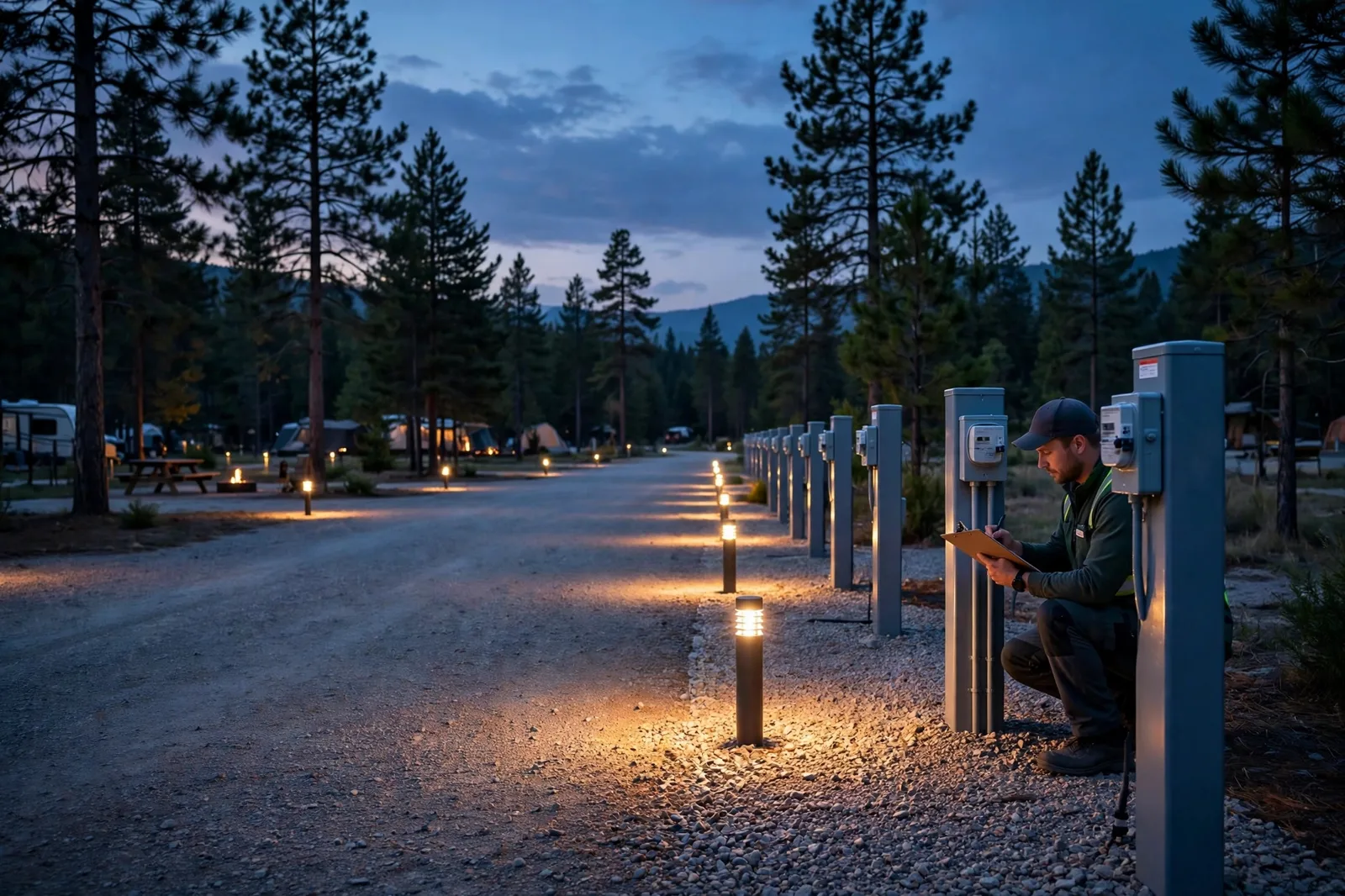
Utilities are the cost line that never sends you a warning. Occupancy you watch daily. Labor you schedule. But the electric bill arrives after the guests have gone home, and by the time a bad month shows up, you've already paid for it. Managing utilities well is mostly about seeing consumption while there's still time to act on it — and handling the metering conversation so it never becomes a guest-relations problem.
Electric: find the load before you fight it
Our take: most parks don't have a usage problem evenly spread across the property. They have a few specific loads: bathhouse water heaters recovering all morning, laundry dryers, pool pumps running longer than the pool is open, aging air conditioning in rentals, and lighting that burns all night whether anyone is awake or not.
Start with a simple load inventory: walk the property and list everything that draws power continuously or on a timer. Then check your utility bill's demand charges, if your rate structure has them — some commercial accounts pay significantly for their single highest peak, which means everything switching on at once on a Saturday morning costs more than the same energy spread out.
Fact: according to the U.S. Department of Energy's consumer lighting guide, LED lighting uses up to 90% less energy than incandescent lighting and can last up to 25 times longer. For a campground, the practical translation is path lighting, bathhouses, and the store — the fixtures that burn the most hours — are where an LED conversion pays back fastest, and the longer life cuts the ladder-and-bucket-truck labor of constant bulb changes.
Timers and photocells deserve the same attention as bulbs. A dusk-to-dawn light in a storage yard that nobody enters is paying rent to the power company.
The metering question, handled calmly
Metering drama almost never comes from the meter. It comes from surprise. Guests accept paying for their own electricity when three conditions hold: they knew before they booked, the rate is visibly fair, and the reading process is transparent.
Our take: for nightly and weekly guests, bundling electric into the rate is usually the right call — the administrative cost of reading meters at every checkout exceeds what you'd recover, and checkout friction costs goodwill. Metering earns its complexity on monthly and long-term sites, where one guest running two air conditioners and a space heater through a cold snap can use several times what the site next door uses.
If you meter long-term sites:
- Put it in writing before the stay begins — the rate per kilowatt-hour, when meters are read, and how the guest can see their reading. (This belongs in your long-term guest agreement; see our article on written policies for long-term guests.)
- Charge at or below your actual cost where your state requires it. Whether you may mark up resold electricity, and whether sub-metering is regulated at all, is a state-by-state question — many states restrict reselling electricity above the utility's rate. Check with your state utility commission or public service commission before you set the number. This is general information, not legal advice.
- Read on a schedule and show your work. Same day each month, a photo of the meter at reading time, and the math on the statement. Transparency is what separates "fair metering" from "the park is padding my bill" in a guest's mind.
- Never let a meter dispute become a shutoff threat. Follow your written policy and your state's rules for any service interruption — in many places, cutting utilities to force payment or departure is restricted even when money is owed.
Water: the leak is the budget line
Municipal water and sewer charges — or pumping and septic costs on your own systems — punish leaks with perfect indifference. A single running toilet in a bathhouse or a slow underground line leak can move more water in a month than your pool.
Our take: the highest-return water habit costs nothing: a weekly walk with a checklist, listening at each bathhouse fixture, checking that no toilet runs on, and reading your master meter on a quiet morning when the park should be using almost nothing. If the meter is moving at 5 a.m. with an empty park, you have a leak, and every week you don't find it is a donation.
For parks on septic, water discipline is also capacity discipline: laundry is usually the largest discretionary load, and coin or card laundry pricing that reflects real cost tends to moderate marathon wash days without a single argument.
Irrigation deserves a line of its own. Watering landscaping at midday in July is mostly evaporation. Early-morning cycles and drought-tolerant plantings around sites cut both the bill and the mud.
Propane: boring logistics, real money
Propane costs are won or lost on logistics rather than conservation: tank sizing that avoids emergency fills at spot prices, a standing relationship with one supplier whose delivery minimums you understand, and fills scheduled before holiday weekends rather than during them. If you sell propane to guests by the gallon or by the fill, weigh or meter honestly, post the price, and keep the filling station's safety equipment inspected — propane handling is regulated, and your state's fire marshal or propane safety authority sets the training and equipment rules that apply to whoever fills bottles.
Put it on one page
Our take: the parks that control utilities keep one simple monthly record: occupancy nights, electric kilowatt-hours and cost, water usage and cost, propane gallons and cost. Divide each by occupied nights and you have cost per occupied site-night — the single number that tells you whether you're improving, and the number that makes a rate conversation honest. When that figure creeps up three months running, walk the property with the load inventory again. The cause is almost always physical, findable, and cheaper to fix in May than to pay for all season.
None of this requires new technology. It requires looking — regularly, on paper, before the bill arrives.
RVeyOS is currently in development — including the kind of operational reporting that puts numbers like cost per occupied night in front of an owner without a spreadsheet fight. Join the waitlist at rveyos.com for launch updates and early access news.