Campground Operations
Opening and Closing the Park: The Two Seasonal Checklists That Prevent Expensive Surprises
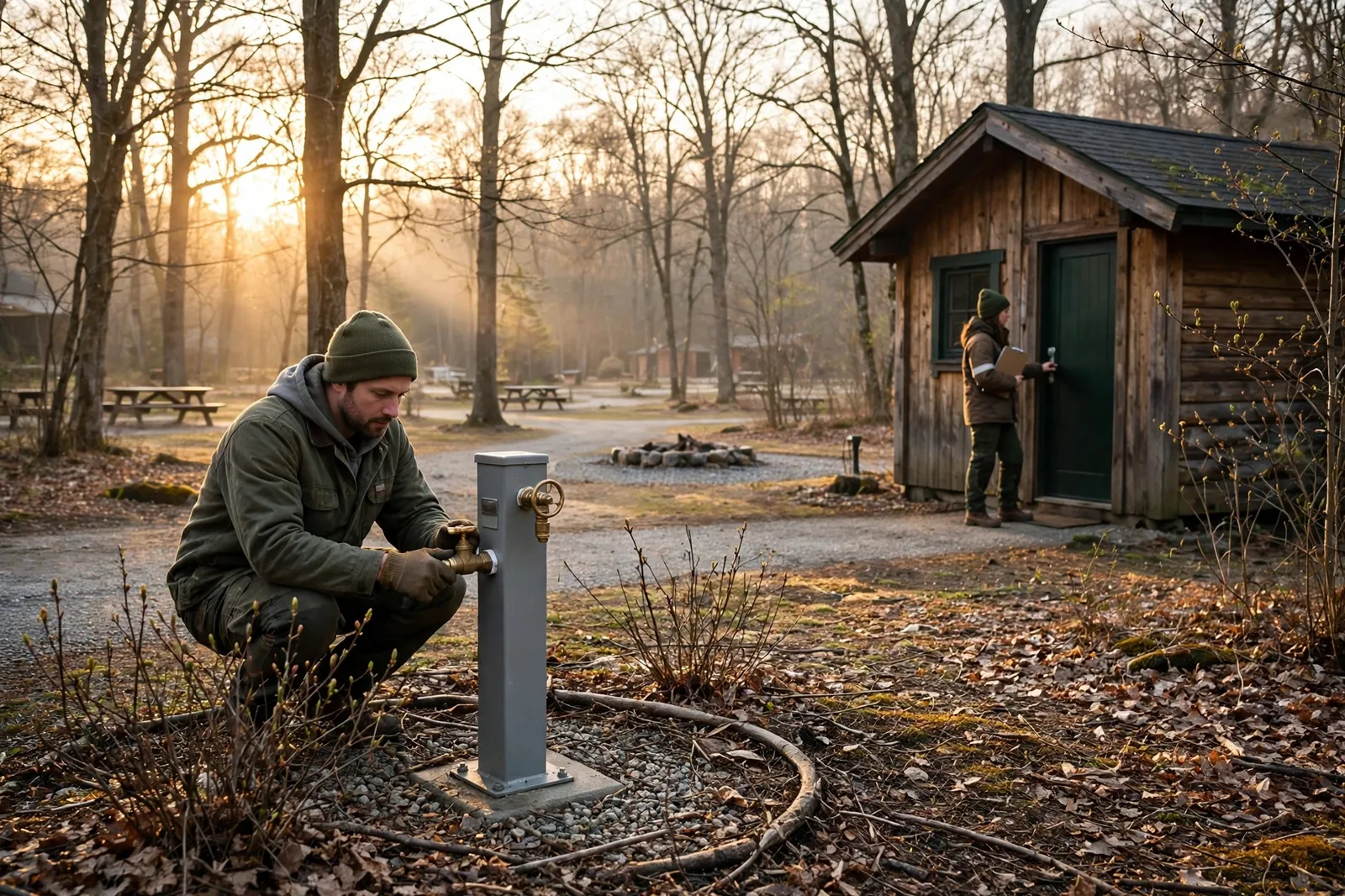
Almost every expensive campground surprise has the same biography: it was small, visible, and findable in April — or preventable in October — and instead it introduced itself on the first full weekend of the season, in front of guests. Opening and closing checklists are how you move those discoveries to a quiet Tuesday when they cost a part and an hour instead of a refund and a reputation.
What follows is professional practice, not engineering advice — your systems, climate, and local codes shape the details. Adapt the lists to your property, and write down what you change.
Closing the park: the list that writes next spring's budget
Closing well is an act of honesty about winter: water expands when it freezes, rodents are looking for exactly the home you're vacating, and anything you leave "for later" will be waiting, worse, in April.
Water and plumbing
- Drain and blow out water lines per your system's design; open every faucet, flush valve, and low-point drain afterward.
- Drain water heaters, and note their age and condition in the closing log — a heater that barely finished the season is a planned winter purchase, not a May emergency.
- Pour RV antifreeze (non-toxic, propylene glycol — never automotive antifreeze) into every trap: sinks, showers, floor drains, toilets.
- Photograph every meter reading — water and electric — on closing day. That photo settles every argument about winter leaks and usage.
Buildings and grounds
- Clean bathhouses and the store before closing, not at opening. A dirty building winters badly and opens worse.
- Remove or secure anything wind can move: signage, umbrellas, unanchored benches, trash cans. Store rental gear, hoses, and cords indoors, off the floor.
- Set up the rodent defense: seal obvious entry points, remove every scrap of food from the store and office, place traps or deterrents where your pest-control practice calls for them.
- Walk every site: pedestals closed and capped, picnic tables stacked or secured, fire rings cleaned.
- Note every defect you are choosing to defer — the cracked dump-station pad, the soft spot in the bathhouse floor — in the closing log, with a photo. That list is your winter work plan and your spring budget, written while the evidence is in front of you.
Systems and security
- Propane: record tank levels, confirm supplier arrangements for winter, and leave valves in the state your supplier recommends.
- Set thermostats to a freeze-safe minimum in any heated building you're keeping live — or drain it fully if you're not. Half-measures are how pipes burst in a building "we were keeping an eye on."
- Arrange the winter check rhythm: who drives through, how often, and after which weather events. A monthly look and a post-storm look catch the tree on the bathhouse roof while it's a tree, not a roof.
Opening the park: reverse the list, then go further
Opening is closing read backwards, plus the inspections that winter makes necessary.
Water first, slowly
- Recharge lines slowly, zone by zone, with someone walking each zone as it pressurizes. Spring leaks announce themselves to a walker in minutes and to a water bill in weeks.
- Flush until water runs clear at the farthest fixture; sanitize the system as your state requires for seasonal water systems — many states have specific start-up procedures for seasonal public water supplies, so check yours rather than assuming.
- Test every site spigot, every bathhouse fixture, every flush valve. The toilet that runs on opening weekend was running in your empty park for a month first.
Electric and safety systems
- Power up pedestals in sections and test each one — outlet, breaker, and light. Test every GFCI on the property; they fail quietly over winter.
- Replace every burned-out path and bathhouse light before the first guest, not after the first complaint.
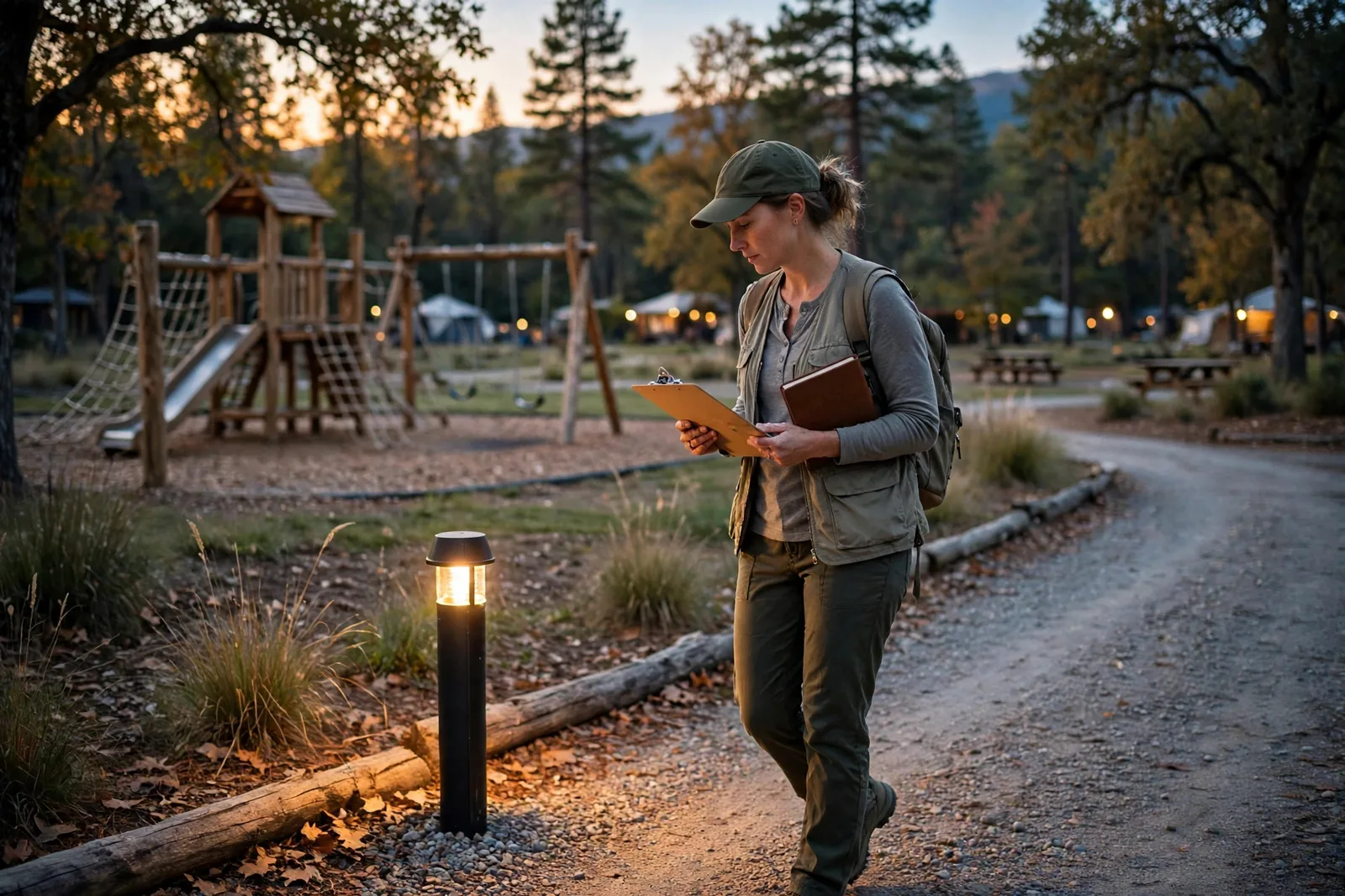
- Run the full safety walkthrough — lighting, signage, play area, paths — as part of opening, not as a separate good intention. Fact: OSHA's walking-working surfaces rule (29 CFR 1910.22) requires employers to inspect walking surfaces regularly and correct hazards before employees use them again; your pre-opening inspection is that duty, discharged before the season starts. Confirm the severe-weather shelter is identified, signed, and unlocked-ready — per the National Weather Service, guests need a substantial enclosed building in a thunderstorm, and your bathhouse only works as one if everyone knows it.
- Check fire extinguishers' tags and charge, first-aid supplies, and the posted emergency address at the office.
The test stay
Our take: before opening day, somebody on your team spends one night in the park as a guest. Book a site, arrive after dark, hook up, shower in the bathhouse, use the Wi-Fi, read the signage, try to find everything a guest needs. Every flaw you find that night is one a paying guest doesn't. It is the cheapest quality control in the industry, and almost nobody does it.
The log is the checklist's memory
Keep both checklists as living documents in one binder or file: closing log with meter photos and the deferred-defect list; opening log with leak repairs, test results, and the test-stay notes. Next year's opening starts by reading this year's closing — which is the entire point. The parks that open smoothly aren't luckier. They wrote things down in October.
RVeyOS is currently in development — we're building seasonal checklists, inspection logs, and maintenance history into the system so the binder survives staff changes and busy springs. Join the waitlist at rveyos.com for launch updates and early access news.