Campground Operations
Preventive Maintenance Systems: The Inspection Rhythm That Prevents Expensive Failures
Campground equipment has a sense of timing. The water heater fails on the Friday of a sold-out weekend. The well pump quits during the season's only heat wave. The pedestal that "seemed fine" lets go with a guest's rig plugged into it. None of this is bad luck — it's deferred inspection coming due at the worst possible moment, because peak demand is exactly when marginal equipment gets pushed over the edge.
Preventive maintenance sounds like corporate language. In a campground it's something much simpler: a rhythm of looking at things before they break, written down, and assigned to somebody. Here's how to build one that fits a real park's staffing.
Why "we fix it when it breaks" is the expensive option
Reactive maintenance always costs more than the repair itself:
- Emergency pricing. Weekend call-outs and rush parts cost what they cost, because you have no alternative.
- Guest impact. A bathhouse out of service on a full weekend isn't a repair bill — it's refunds, comps, and reviews that mention it for years.
- Cascade damage. The small roof leak becomes the rotted subfloor. The dripping valve becomes the flooded utility trench. Failures left alone rarely stay the same size.
- Your time. Every emergency lands on the owner, mid-whatever-else, and eats the day.
The alternative isn't maintaining everything perfectly. It's catching the cheap version of each failure: the drip before the flood, the flicker before the outage.
The rhythm: daily, weekly, monthly, seasonal
A workable system layers inspections by frequency, matched to how fast things deteriorate.
Daily (folded into existing rounds)
These take minutes and ride along with work already happening — opening the park, morning rounds, cleaning:
- Bathhouses: water temperature and pressure, leaks, lights, supplies, anything guests will hit first.
- Trash and dump station: capacity before the weekend surge, rinse hose working, enclosure tidy.
- A drive-through eye on sites turning over: pedestal damage, spigot drips, left-behind hazards.
- Pool (if you have one): readings and equipment running normally, gate latching.
Weekly (a dedicated walk, checklist in hand)
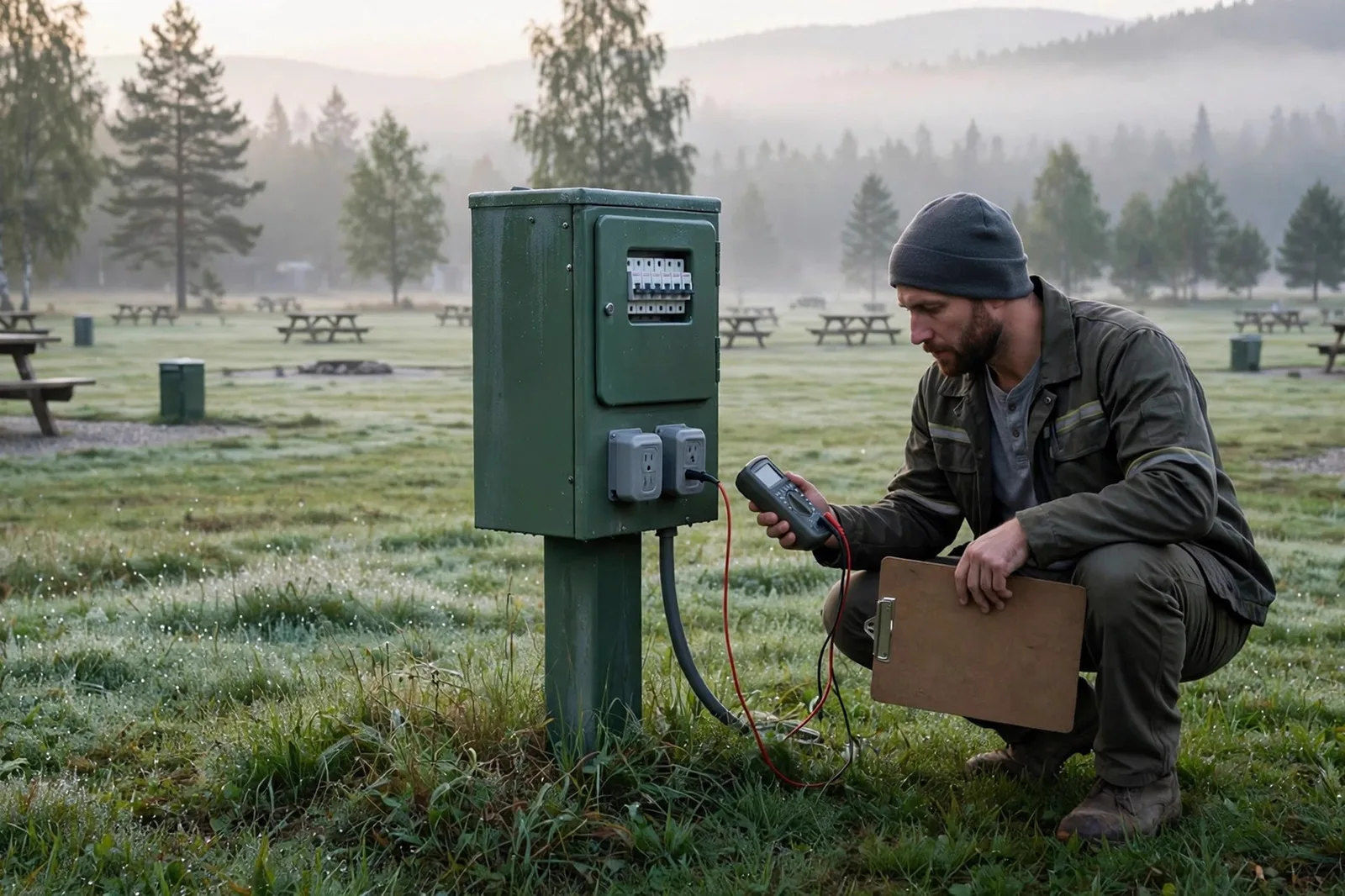
- Every pedestal, on rotation: outlets tested, breakers exercised, covers and posts sound. A rotating schedule — a section per week — covers the park monthly without a marathon.
- Water system: pressure check, listen for the pump short-cycling (the earliest warning of a leak or failing pressure tank), inspect exposed lines.
- Lighting along roads and paths, site numbers legible.
- Playground and common-area hardware: bolts, swings, latches, wasp nests in the places kids reach.
Monthly (the systems you forget until they quit)
- Water heaters: check for leaks and sediment noise; drain a few gallons where the manufacturer calls for it.
- HVAC and office equipment filters.
- Septic and sewer: observe drain fields for wet spots or odor, confirm lift-station alarms actually work by testing them.
- Vehicles and equipment: the mower, the tractor, the golf carts — fluids, tires, blades — serviced on hours or calendar, whichever your logs support.
- Safety gear: fire extinguishers in date, first-aid stocked, emergency lighting tested.
Seasonal (before the rush, not during it)
- Pre-season: full water-system pressure test, every site hookup run and checked, bathhouse deep inspection, road and pad repairs while you can still close sections without displacing guests.
- Winterizing or storm prep for your climate: lines drained or protected, trees assessed over sites and lines, drainage cleared before the rains.
- Post-season: the honest debrief — what failed, what limped, what gets replaced before next year, while the memory is fresh and contractors are bookable.
The system is the paperwork, kept light
A rhythm only survives if it's written down and lighter than the work it prevents:
- One checklist per frequency, on a clipboard or a phone — checkboxes, not essays.
- A log that takes thirty seconds. Date, initials, what was found, what was done. The log's real value shows up later: patterns ("that pump has short-cycled three weeks running") and proof of diligence if anything is ever questioned.
- A single "watch list." Every inspection will find things that aren't broken yet — the soft spot in the bathhouse floor, the breaker that feels warm. They go on one visible list with a planned date, instead of living in somebody's memory until they graduate to emergencies.
- Named ownership. Each rhythm belongs to a role, not a hope. If the weekly walk is "whoever's free," it's nobody's.
Start smaller than you think
The most common failure is designing the perfect system in January and abandoning it by May. Start with the daily bathhouse-and-grounds round and one weekly walk, run them for a month, and let the rhythm prove itself. Add the monthly layer once the first two are habit. A modest system that runs all season beats a comprehensive one that dies in spring.
The bottom line
You can't prevent every failure, and you don't need to. You need to meet your equipment on your schedule instead of its own — because its schedule is a sold-out Saturday. A clipboard, a rotation, and a watch list will quietly save you more money and more reviews than almost any other habit in park operations.
RVeyOS is currently in development, including maintenance and inspection tools built around the rhythms real parks keep. It is not yet commercially available. Join the waitlist for launch updates, and read more operator guides on the RVeyOS blog.