Campground Operations
Storm Readiness for Campgrounds: Building a Weather Plan Before You Need One
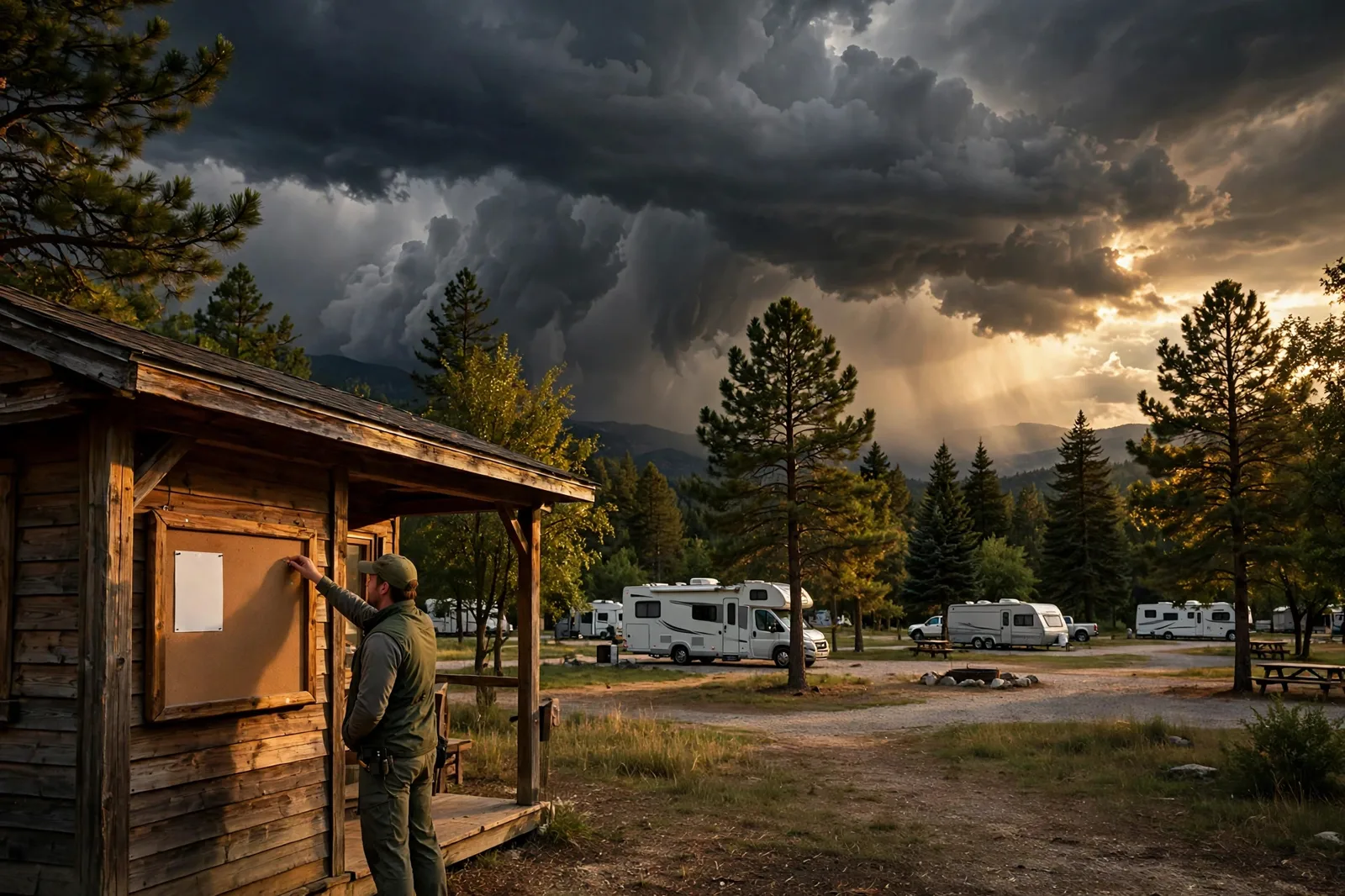
A campground is an outdoor venue where hundreds of people sleep in vehicles and tents, spread across acres, often far from a substantial building, frequently with no idea where they would go in an emergency. That is not a criticism — it is a description of the business — and it is why severe weather is the one operational risk a campground cannot improvise. This article summarizes National Weather Service guidance (fact) and applies it to campground operations (professional opinion). It is general information, not a substitute for your local emergency management's direction.
The Facts From the National Weather Service
The NWS lightning guidance rests on a few plain statements:
- "When thunder roars, go indoors." If you can hear thunder, lightning is close enough to strike — bolts can travel 10 to 15 miles from their storm. There is no safe place outside during a thunderstorm.
- Safe shelter means a substantial building with electricity and plumbing, or a hard-topped vehicle with the windows up. Tents, picnic shelters, pavilions, and open-sided structures are not safe, however solid they feel.
- Wait 30 minutes after the last thunder before returning outside. Each new rumble restarts the clock.
- For outdoor venues, the NWS lightning safety toolkit calls for a written plan with specific elements: a designated weather watcher, a way to receive warnings continuously, a public notification plan, identified safe structures with evacuation instructions and maps, and staff education with periodic plan review.
Lightning gets the headlines, but your plan should also cover the other hazards your region actually gets: severe thunderstorm winds (the most common tree-and-awning killer), flash flooding (never let guests cross flooded roads or camp in a known flood path during a flood watch), tornadoes (shelter = the sturdiest interior room available, typically a bathhouse or office core), and extreme heat.
Translating That to a Campground (Professional Opinion)
Name the weather watcher per shift. "The staff watches the weather" means nobody does. Each shift, one named person owns the forecast check at open, the radar check at midday, and the authority to act. Authority matters: the watcher must be able to close the pool, cancel the hayride, and start notifications without finding the owner first. This role belongs on the escalation list you build during seasonal staff training.
Know your shelter math. Count your realistic substantial-building capacity against a full house. For most parks the honest answer is: bathhouses and the office shelter some guests, and hard-topped vehicles shelter the rest — which is fine, because an RV or truck is genuinely protective in lightning and wind (not in tornadoes or floods; your plan should say where people go for those, even if the answer is a designated sturdy building plus early evacuation triggers). Write the answer down per hazard, and put the shelter locations on the site map guests already receive.
Notification has to reach a person in a tent at 2 a.m. A sign in the office is not a notification plan. Layer it: text message to all registered guests (you have their numbers from booking), a vehicle with a loudspeaker making loops, staff knocking on doors in the tent area, and a posted plan at check-in that tells guests before the storm what a warning will look like. Weather radios in the office and a phone alert app on the watcher's phone cover the receiving side; know the difference between a watch (prepare) and a warning (act now), and pre-decide what each triggers at your park.
Decide your triggers in calm weather. Examples: lightning within earshot → pool and waterfront closed, guests advised to shelter; tornado warning for your county → all guests to designated shelter, staff sweep restrooms and tent areas; flash flood warning → low sites notified in person, no vehicle crossings of the creek road. The middle of a storm is the worst possible time to invent thresholds.
The Seasonal Drill
Build the plan into your seasonal opening checklist: verify shelter signage, test the guest text-alert path, brief every hire on their storm role, and run one tabletop walk-through — "Saturday, 9 p.m., full park, tornado warning: walk me through your next ten minutes." Fifteen calm minutes in April is what makes the real ten minutes orderly. After any actual event, note what failed while it's fresh and revise the plan; the NWS toolkit treats review as part of the plan, not an afterthought.
A weather plan costs almost nothing but attention, and it protects the two things a campground cannot replace: its guests and its good name. RVeyOS is currently in development — guest messaging and staff coordination are core to what we're building. Join the waitlist for launch updates.